Master’s Degree in Commercial Space Design

About the master
Projects
Faculty
Admission and fees
Internships
Alumni
Interiores de la Escuela Superior de Diseño de MadridHaciendo en Escuela Superior de Diseño de Madrid

General Information

Qualification

Master’s Degree in Higher Artistic Education in Commercial Space Design (Official Master’s Degree within the European Higher Education Area, EQF Level 7, MECES Level 3

Credits

60 ECTS

Plazo cerrado

Duration

1 year

Learning Format

On-campus

On-campus

Start Date

September

Pre-registration

1st pre-registration period: 18 February – 22 March 2026

Applications Open

The Master’s Degree in Commercial Space Design at Madrid Higher School of Design prepares professionals capable of combining a global perspective with specialised expertise in the retail sector.
This is a comprehensive, All-in-one master’s programme that integrates spatial design with a strategic understanding of business models, service design and user experience, all aimed at developing innovative and socially responsible projects.

The ESD’s Master’s in Retail Space Design combines architecture, design and visual marketing, providing an in-depth understanding of retail in its broadest sense, as a reflection of social behaviour and a force shaping both urban life and the identity of cities.

As in professional practice, this master’s degree provides multidisciplinary training in design, technology, business management, marketing and strategy, all focused on designing and shaping meaningful shopping experiences.

The ESD’s Master’s in Commercial Space Design is aimed at graduates with a creative background in architecture or design who wish to deepen their expertise and specialise in the field of retail.

Curriculum

30 ECTS

First Semester

Creating Retail Environments

3 ects

Experience Design

3 ects

Visual Marketing

4 ects

Strategic Design and Business Models

4 ects

Digital Marketing and Network Communication

4 ects

Construction and Planning Design

4 ects

Building Technology and Technical Systems (CTE)

4 ects
Core Modules|Elective Modules
30 ECTS

Second Semester

Creativity and Innovation

3 ects

Project Management

4 ects

Commercial Space Project

4 ects

Design Management

4 ects

Commercial Lighting Design

4 ects

External Internships

5 ects

Master’s Final Project

11 ects
Core Modules|Elective Modules
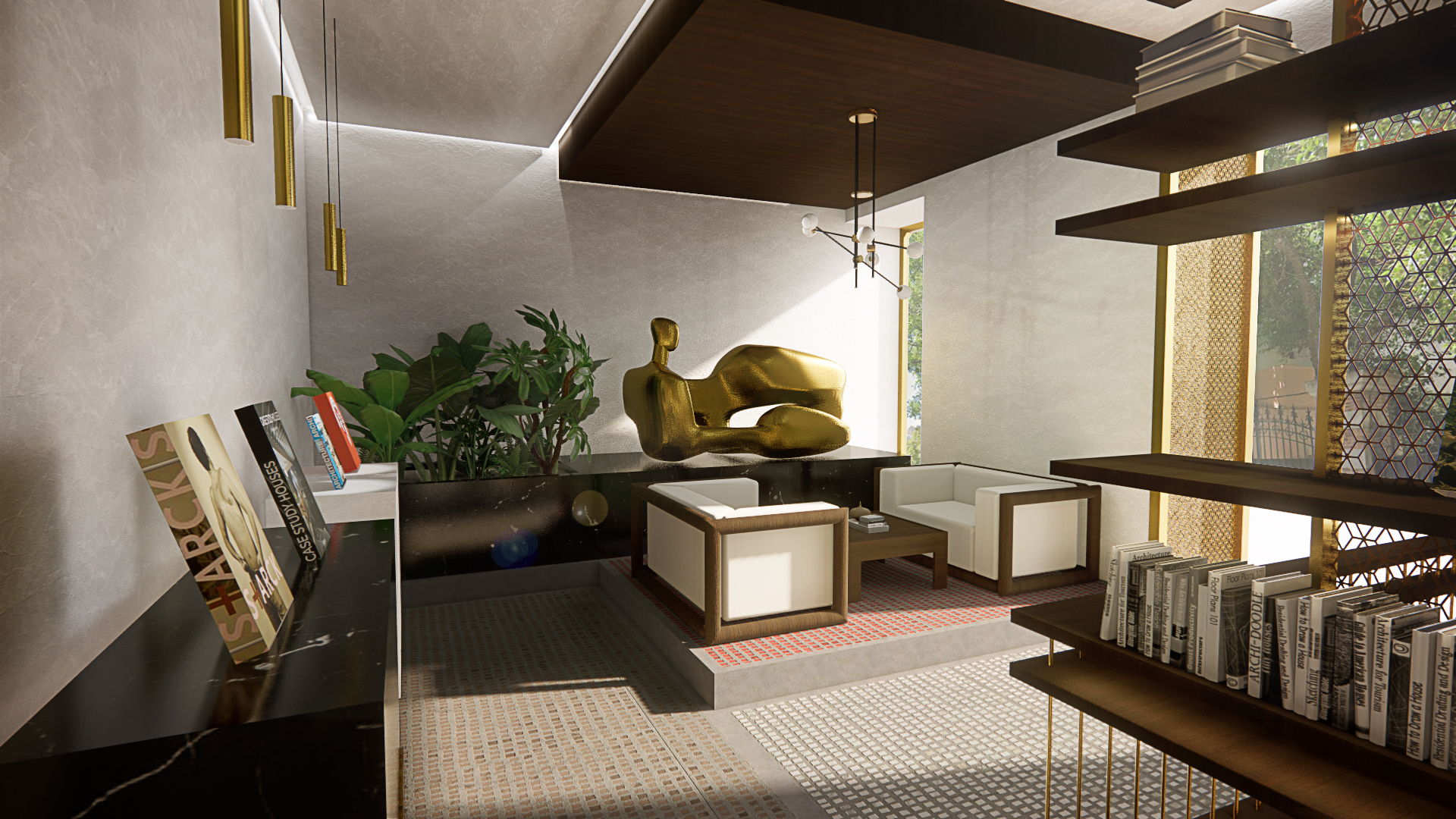
Interiores de la Escuela Superior de Diseño de Madrid
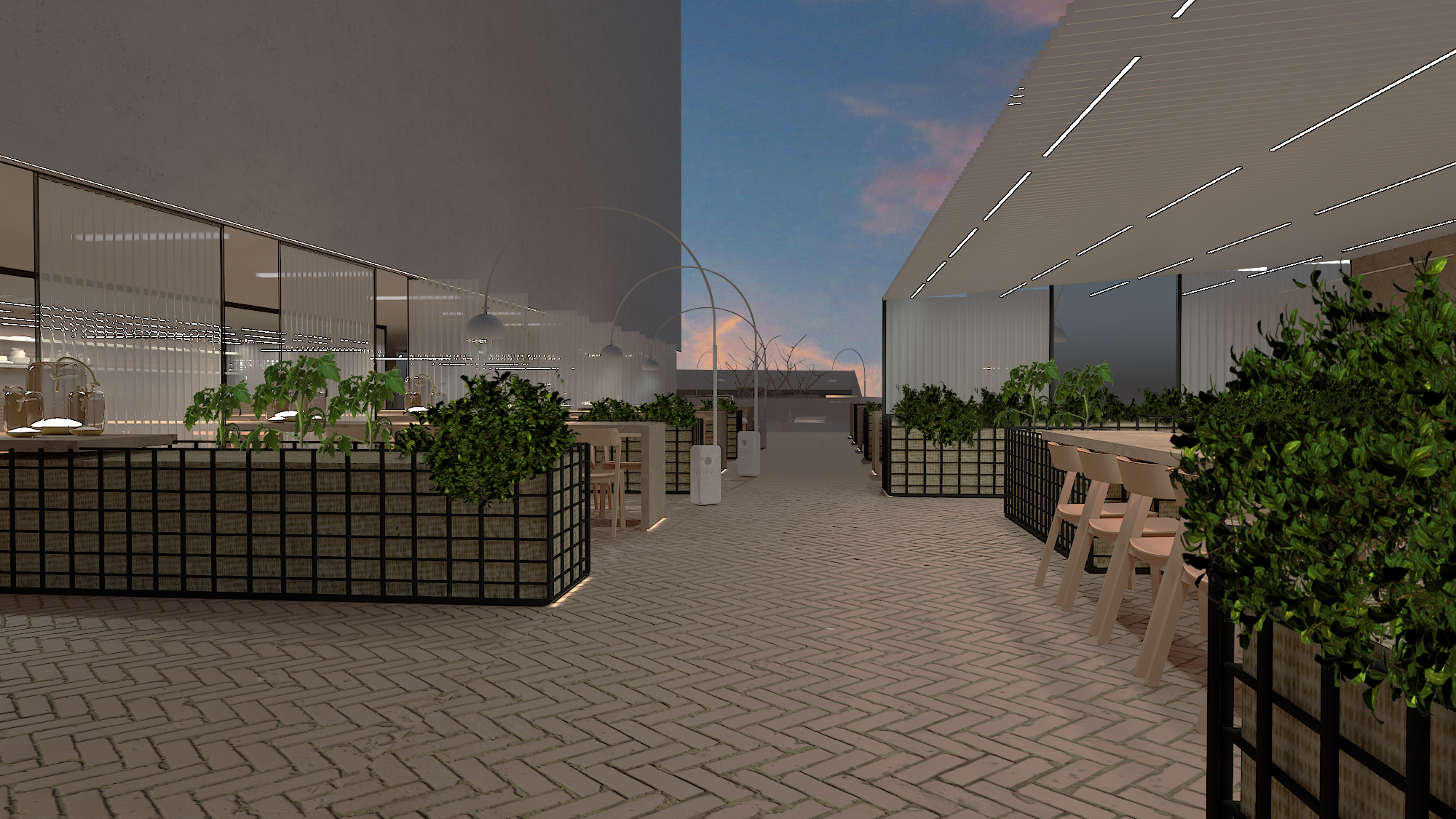
Exteriores de la Escuela Superior de Diseño de Madrid

Why Study at ESD Madrid

[ 1 ]

Public and Accessible Education

As a public institution, ESD offers an extensive network of collaborations with companies, organisations and institutions at both national and international level, while maintaining its social commitment through publicly regulated tuition fees adapted to students’ income levels.

[ 2 ]

"Hands-on Learning" Methodology

The core methodology of the Master’s programme is project-based, with many of these projects developed in collaboration with companies and external institutions.

[ 3 ]

Personalised and Supportive Learning Environment

With a maximum of 20 students per group and a faculty that combines academic expertise with professional practice, the programme develops within an approachable and supportive environment that enhances the quality of teaching and learning.

[ 4 ]

Curricular Flexibility

A comprehensive education in spatial and service design, combined with a strategic understanding of business models, helps to train future professionals specialising in a complex field that has a significant socio-economic impact and is constantly evolving within the retail sector.

[ 5 ]

Social and Environmental Impact

Design thinking is used in developed societies to foster creative solutions to complex challenges, and is especially valuable where knowledge from multiple disciplines contributes to economic development and quality of life. The MDEC (Master’s Degree in Commercial Space Design) is framed within this vision.

[ 6 ]

Training in Design Thinking and Professional Practice

The ESD’s Master’s in Commercial Space Design seeks to train commercial space design professionals capable of working across a broad spectrum — from highly specialised roles within major brands to design services for SMEs — while providing students with an integrated strategic perspective.

[ 7 ]

International Partnerships

As a public institution, ESD offers an extensive network of collaborations with companies, organisations and institutions at national and international level, while maintaining its social commitment.

Want to Learn More About the School?

Discover our mission and what drives us

Career Opportunities

Career opportunities for commercial space designers today are wide-ranging and full of possibilities within a constantly evolving professional landscape. Numerous paths are offered by the retail sector offers that allow designers to explore different roles and find their place in the industry.retail, que permiten a los diseñadores explorar diferentes roles y encontrar su lugar en el mercado.

Comprehensive development of retail interior design and fit-out projects
Strategic service design
Brand identity and values (In-house)
Customer experience
Marketing and communication
Freelance and entrepreneurship
Research
Teaching

Projects

Showroom para Taschen

Laura Suárez Conde · Showroom para Taschen

Salomé Laurenty

Alejandra Rivera Roa · Salomé Laurenty

GRØW URBANCONCEPT

Tania Bermejo Pérez · GRØW URBANCONCEPT

Close

In Póster, our digital magazine, you can find more outstanding student projects.

Faculty

Marta Pastor Estébanez

The creation of retail environments | Commercial space project

Fátima Ferreiro Galguera

Creativity and Innovation

Oscar Jimenez Salvador

Building Technology and Technical Systems (CTE)

Juan Victoriano Sánchez Martín

Experience Design

Ramón Antonio González Mayo

Construction and Planning Design | Internships

Marta Ruíz de León Robledo

Strategic Design and Business Models | Design Management

Close

Subjects taught

What moves you

Contact

Admissions & Fees

[ 1 ]

Requirements

Plazo cerrado

Applicants holding an Official Higher Artistic Education Degree, a Bachelor’s degree or equivalent qualification issued by an institution within the EHEA that grants access to Master’s level studies in the issuing country may apply. Applicants holding a non-EHEA university degree may also apply without the need for official recognition, provided they can demonstrate an equivalent level of education and eligibility for postgraduate studies in the country of issue.

[ 2 ]

Application Timeline

Applications Open

Early Pre-registration 1
(preparatory phase with no allocation effect)

Application period:
18 February – 22 March 2026

Application validation period:
27 – 30 March 2026

Provisional list of eligible candidates 1:
5 April 2026

________
Early Pre-registration 2
(preparatory phase with no allocation effect)

Application period 2:
5 April – 22 May 2026

Application validation period:
29 May – 2 June 2026

Joint provisional list of eligible candidates (1 + 2):
8 June 2026

________
Official Admission & Enrolment
(single administrative resolution with legal effect)

Final application deadline for admission process:
8 – 23 June 2026

Admission validation period:
24 – 26 June 2026

Provisional admission results:
29 June 2026

________

Final admission results:
17 July 2026

________
Official enrolment period:
Until 31 July 2026

[ 3 ]

Application Process

You must complete the application form and submit the following documents:

  • Identity document: National ID (NIF), Foreign ID (NIE) or Passport.
  • Curriculum Vitae.
  • Academic degree or proof of having applied for it.
  • Academic transcript, including subjects, credits (or hours), and grades obtained in each of them.
  • Motivation letter explaining the reasons for applying to this postgraduate programme (academic, professional and personal).
  • Portfolio or project report with five selected works. (2)
  • English language certificate (B2 level or higher). Optional
[ 4 ]

Recommended Applicant Profile

Designers graduated in Higher Education in Design and Fine Arts, architects and technical architects interested in commercial design, and marketing professionals interested in design and its management.

[ 5 ]

Admission Criteria

Degree 10%
Average academic grade of qualifying studies 15%
Portfolio
1. Quality and relevance of projects 50%
2. Variety of themes 25%
3. Relevance to the master’s subject area 25%
25%
Personal Interview (to be held in June or September)
During the interview, candidates who meet the specific criteria will be assessed, with questions focusing on the documents submitted with the application and related topics.
10%
Motivation Letter
The content and expression of the letter will be assessed according to the following structure:
1. General professional interests 30%
2. Alignment with the master’s programme 30%
3. Specific objectives after completing the programme 40% 40%
10%
Online Admission Test (from 15 June to 27 June)
This 90-minute test aims to evaluate aspects that are difficult to assess through other criteria:
1. Ability to relate heterogeneous concepts 40%
2. Ability to interpret visual messages 30%
3. Ability to adopt the perspective of the user or recipient 30%
20%
Curriculum Vitae 10%
[ 6 ]

Escribe amaster@esdmadrid.es si tienes alguna duda que resolver o consulta que quieras realizar
Household Income per Capita
Fee reduction
Total programme fee
Up to €15,000
80%
€1,032 + €19 (administration fees) = €1,051
From €15,001 to €50,000
75%
€1,290 + €19 (administration fees) = €1,309
From €50,001 to €100,000
70%
€1,548 + €19 (administration fees) = €1,567
Over €100,000
€5,160 + €19 (administration fees) = €5,179
Cerrar
Gracias por dejarnos tu email.
Te avisaremos cuando se abra el registro del próximo curso.

Internships in Companies

External internships are aimed at students who wish to develop a professional career in the fields of design, visual communication and image. The objective is to provide direct professional experience that supports their growth: engaging with organisational and professional planning processes, information management, decision-making, and problem-solving are key aspects reinforced through professional practice.

Work internships take place during the second half of the course. The ESD’s Internship Coordination Team is responsible for contacting and proposing agreements with those organisations, companies and institutions that best meet the students’ training needs, as well as monitoring their placement. Internship allocation is subject to the availability of host organisations, the validity of agreements, the alignment between student profiles and placement requirements, and the specific tasks to be performed in each case.